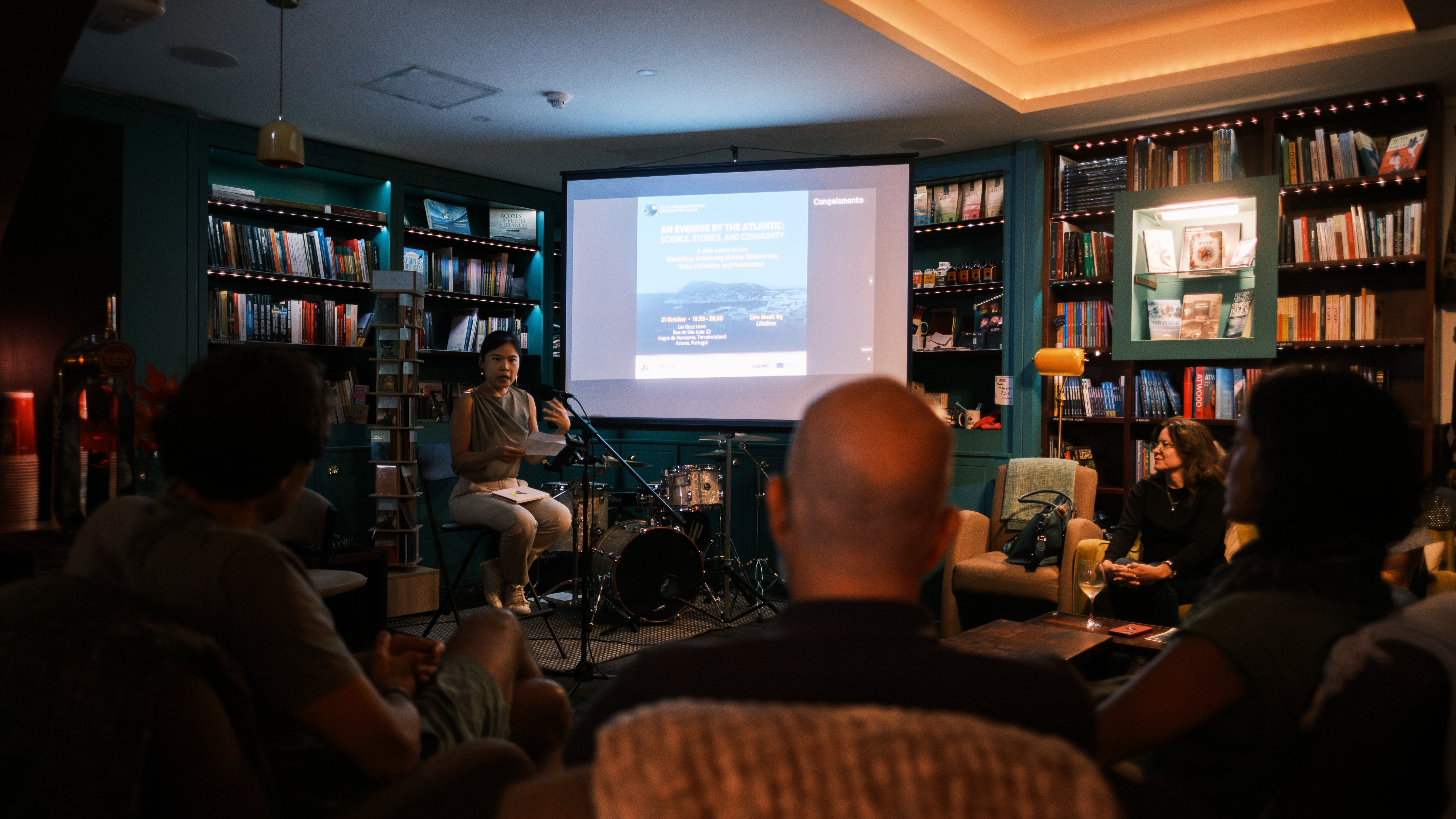
Ocean science is usually shared through data, papers and presentations. But behind the research there are personal stories: a memorable discovery, a photograph, a relationship built over years with the people and animals of the sea. On 21 October, at Terceira Island in the Azores, those stories took centre stage.
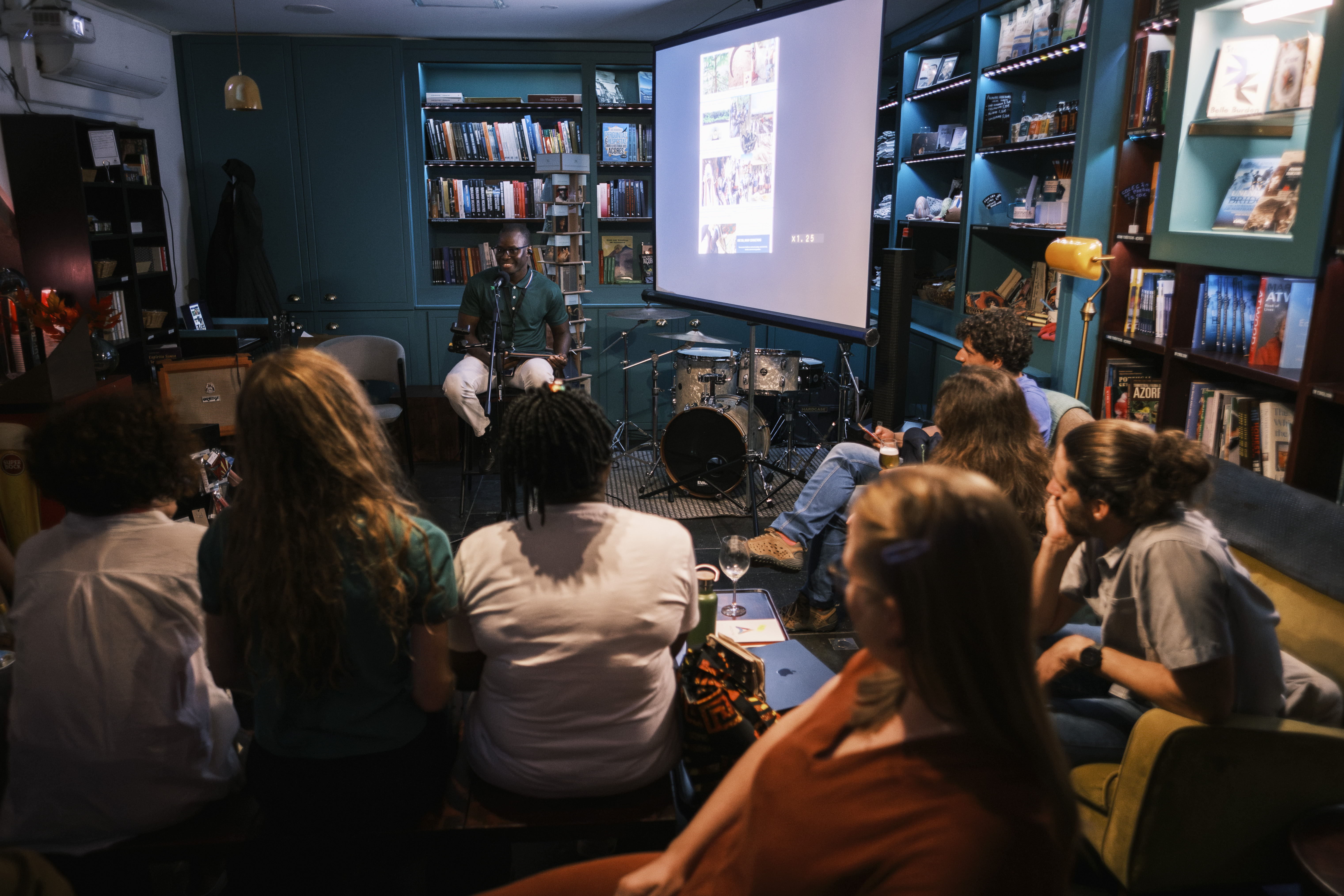
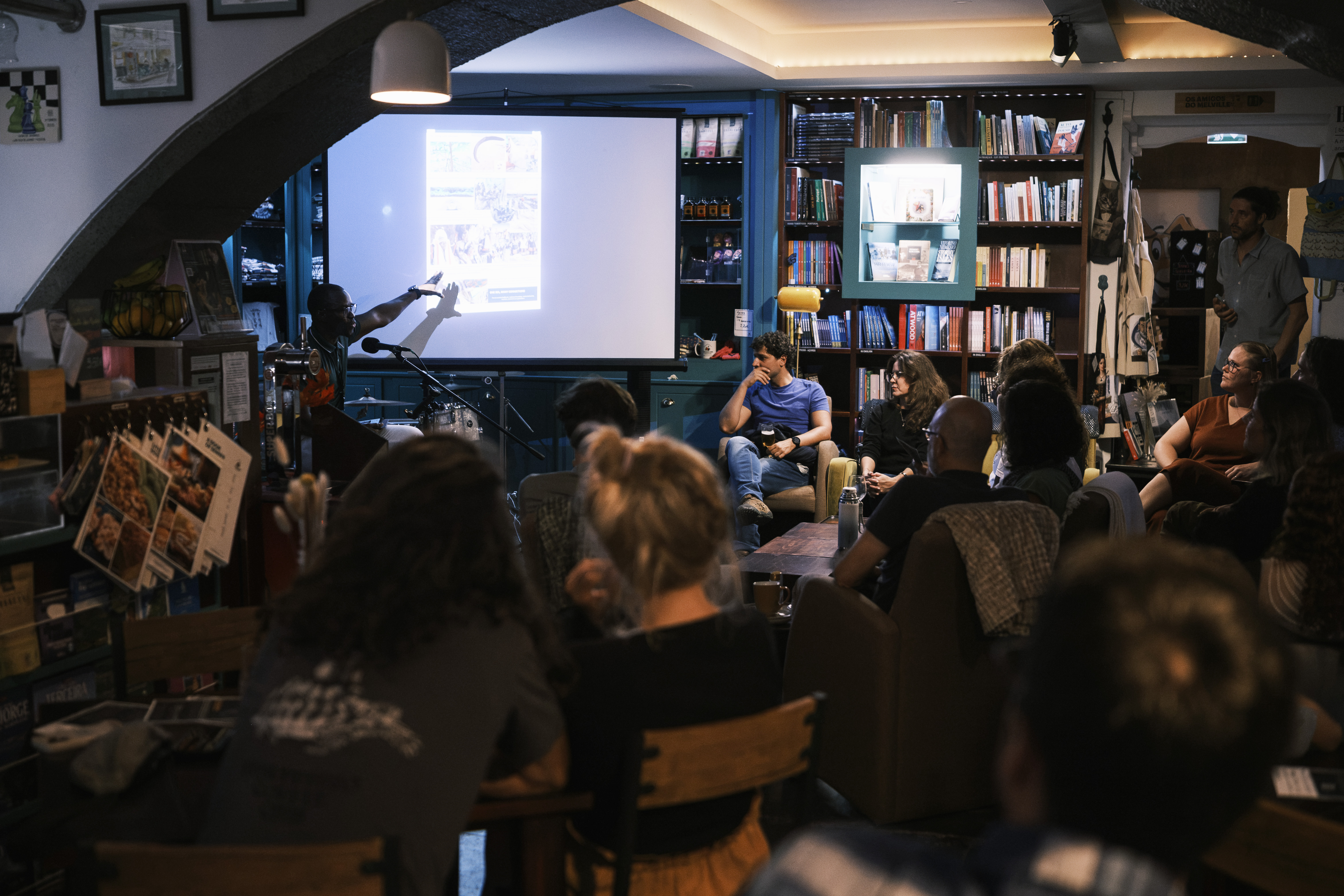
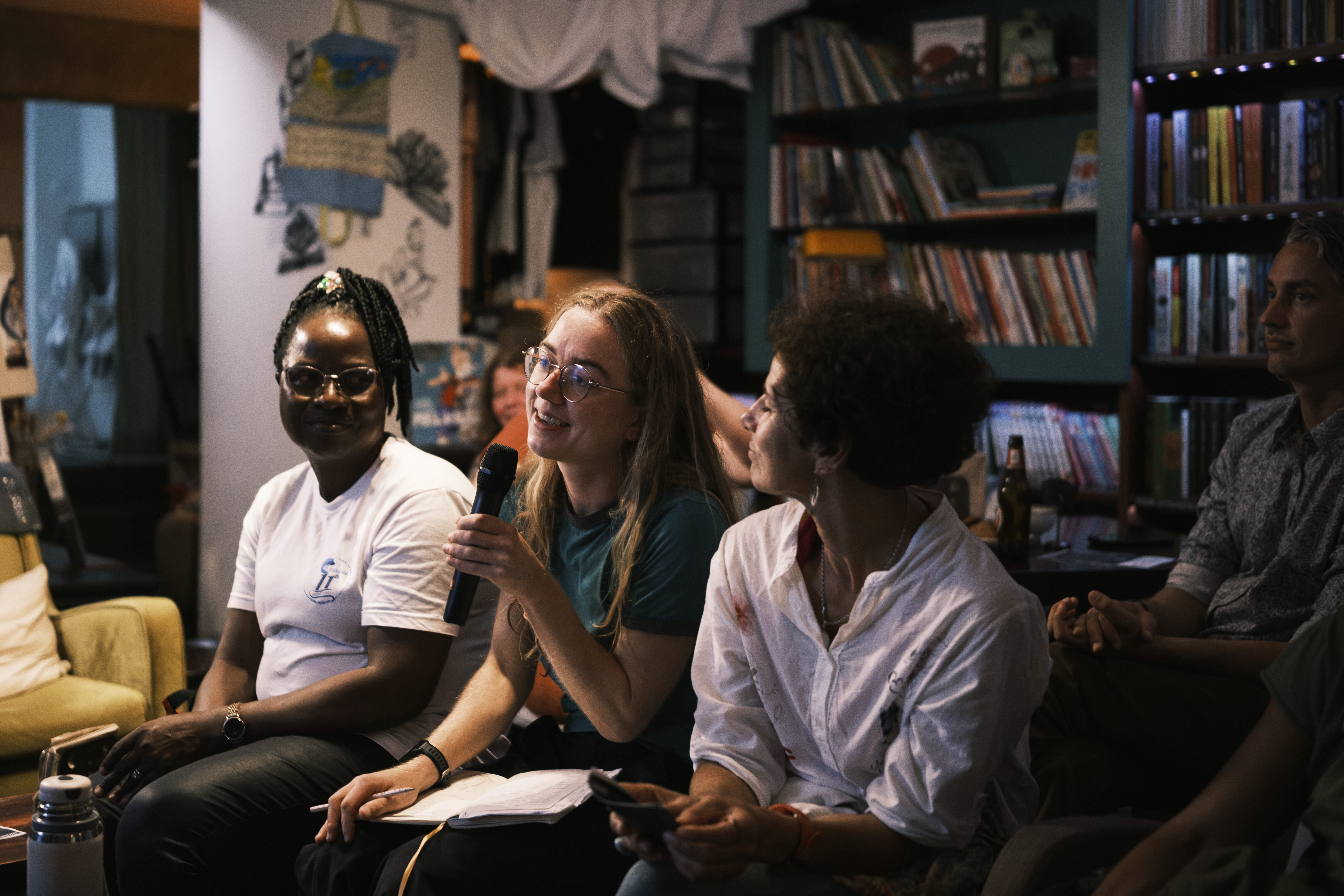
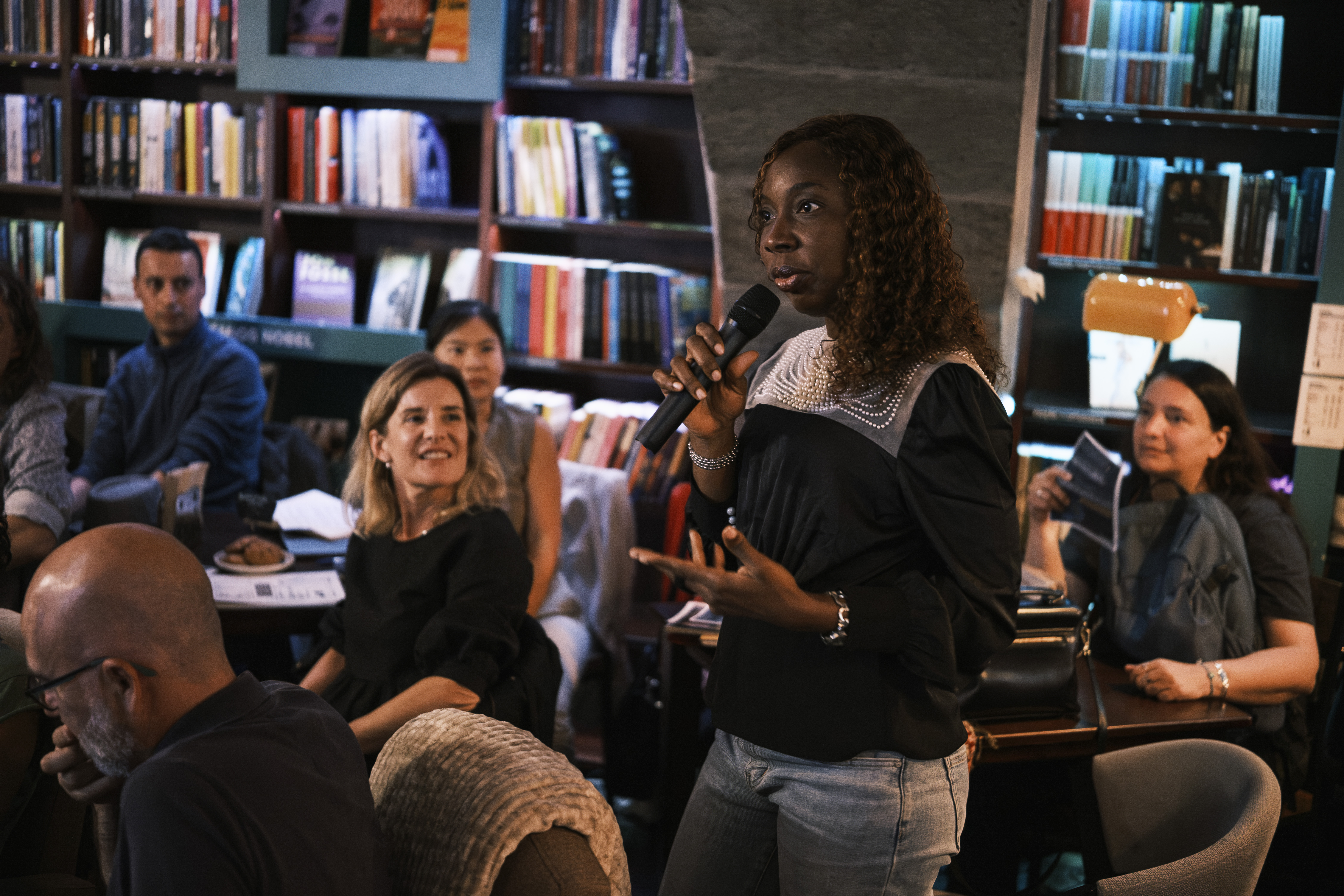
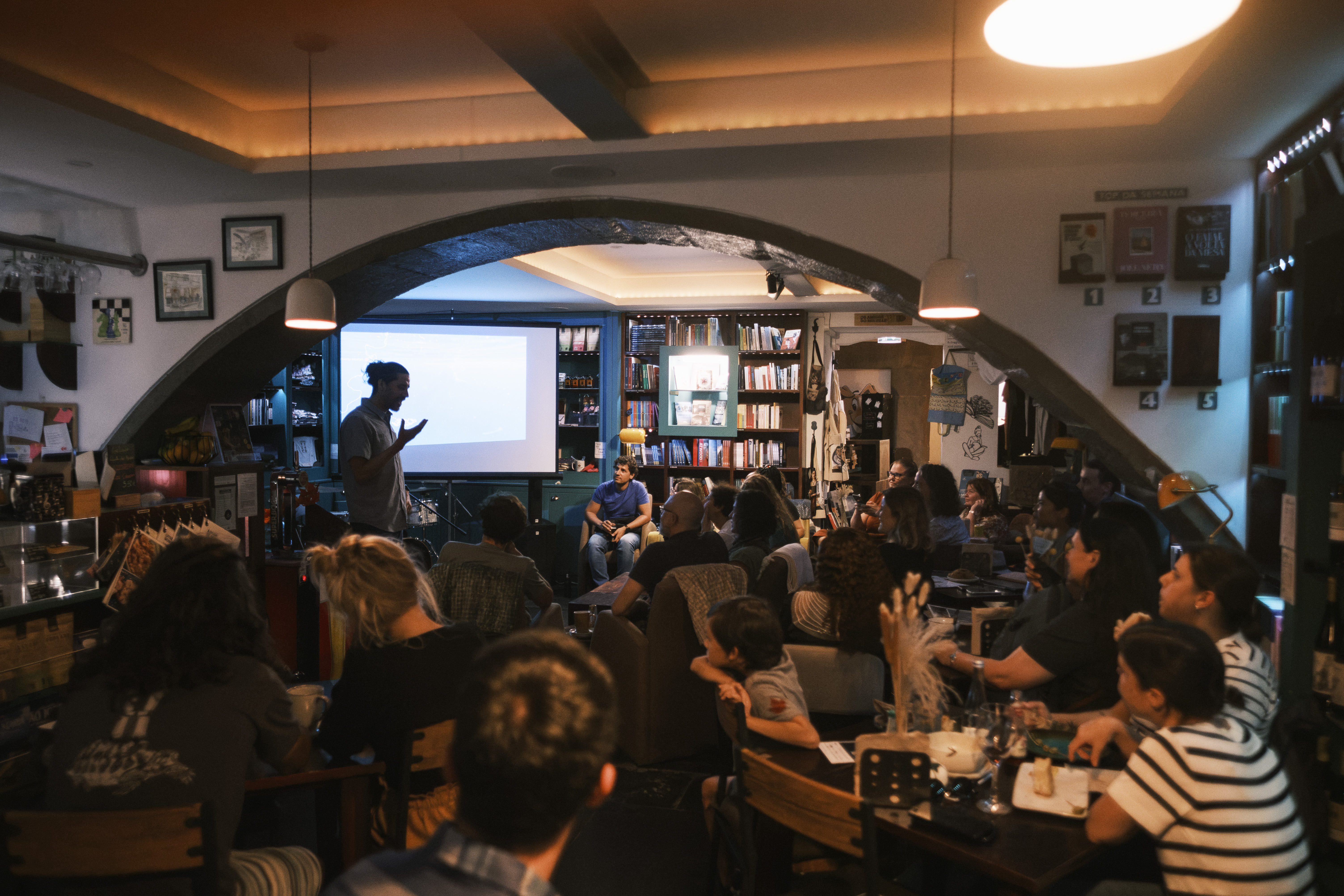
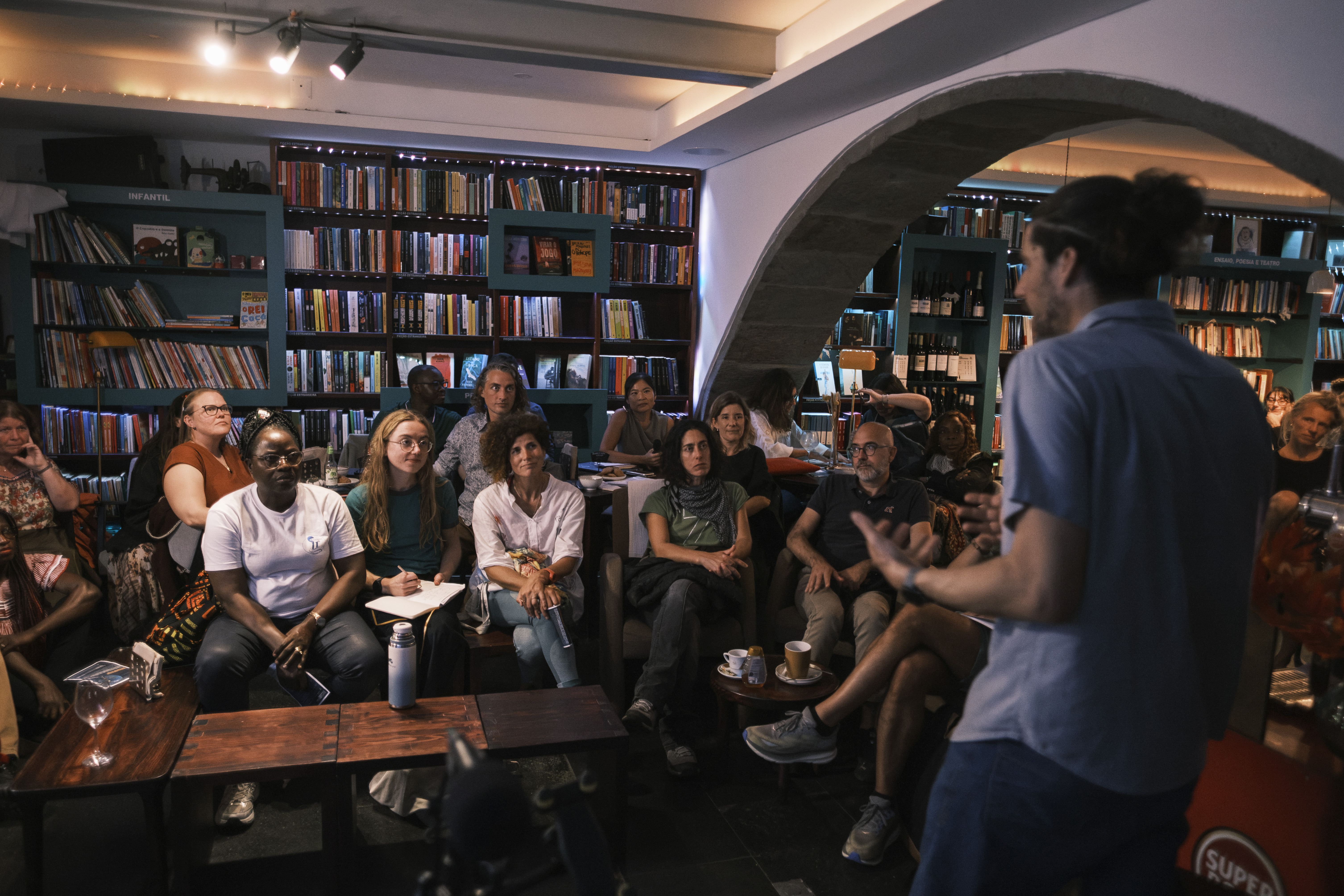
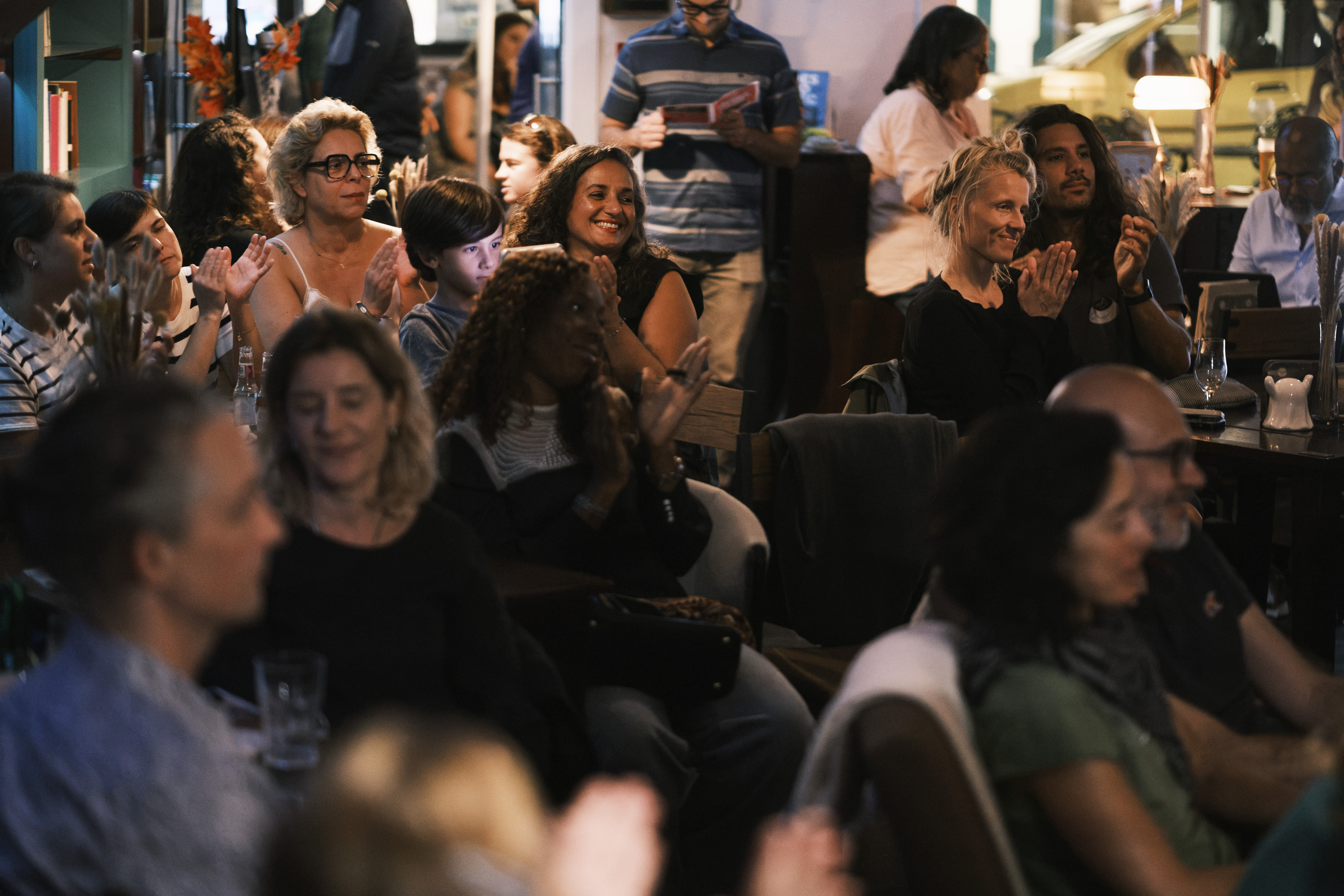
“An Evening by the Atlantic: Stories, Music, and Community” took place at Lar Doce Livro in Angra do Heroísmo as a side event to the workshop “Enhancing Marine Biodiversity Data Collection and Publication” (19–23 October). It brought together workshop participants and local residents in a full room.
Five guests from across the Atlantic each shared a story about the ocean in their own place.
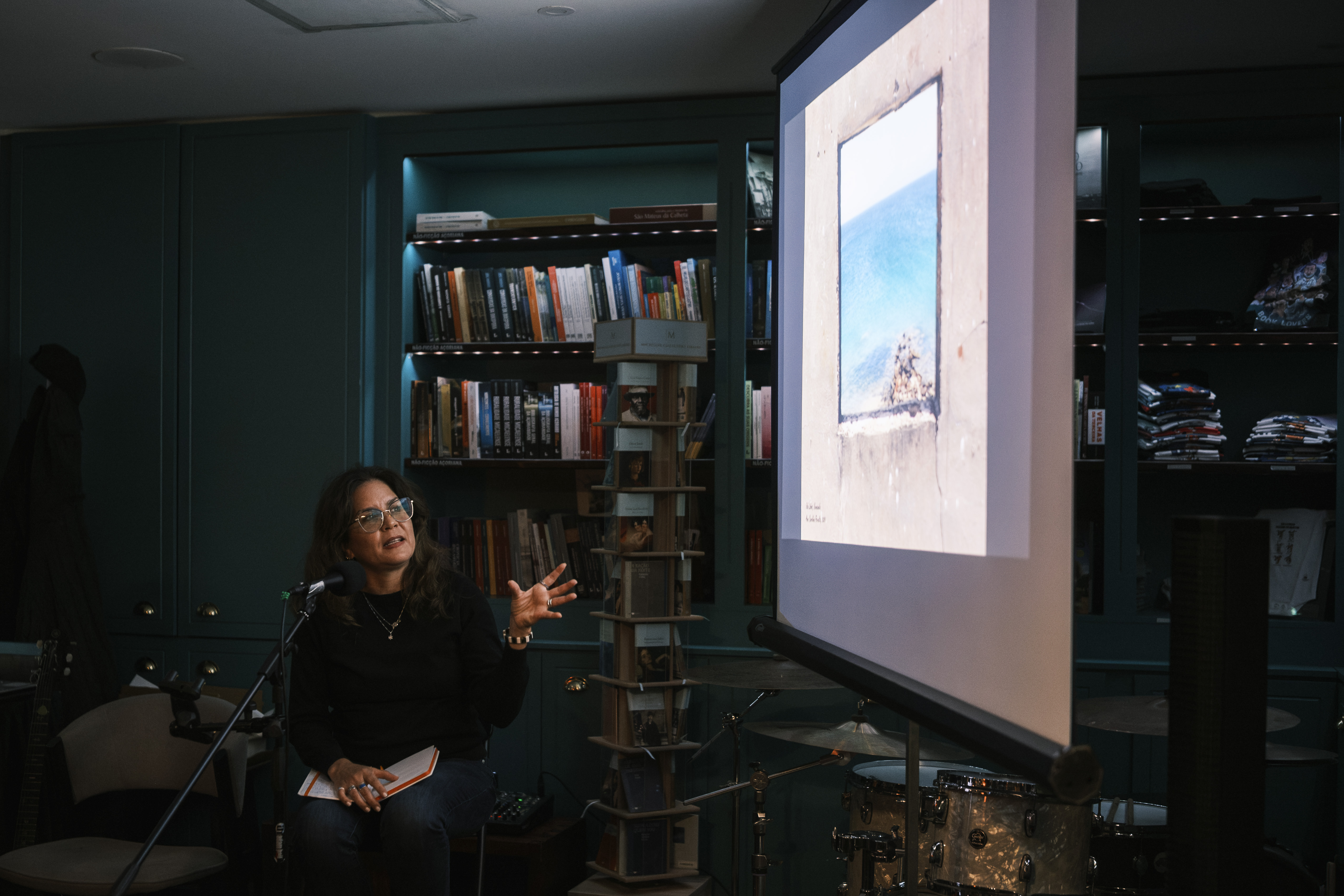
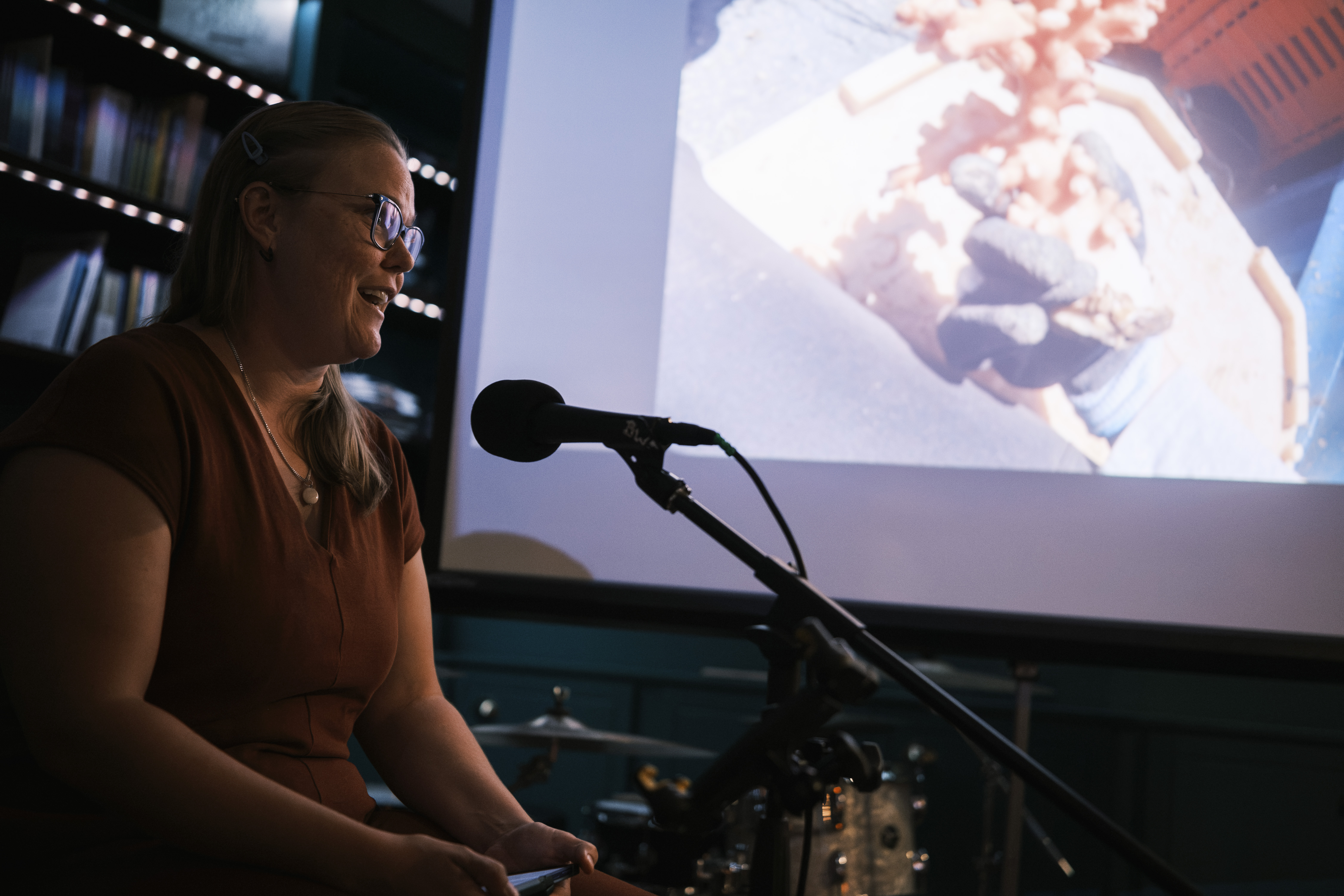
Ana Carolina Peralta, a Venezuelan marine biologist now with MBON and the University of South Florida, brought “Mi ventana” (“My window”), her photograph of the sea at Isla Lobos, Venezuela, seen through a square opening in a weathered wall that frames the turquoise water like a picture. It won first place in a photography contest at Universidad Simón Bolívar in 2009.
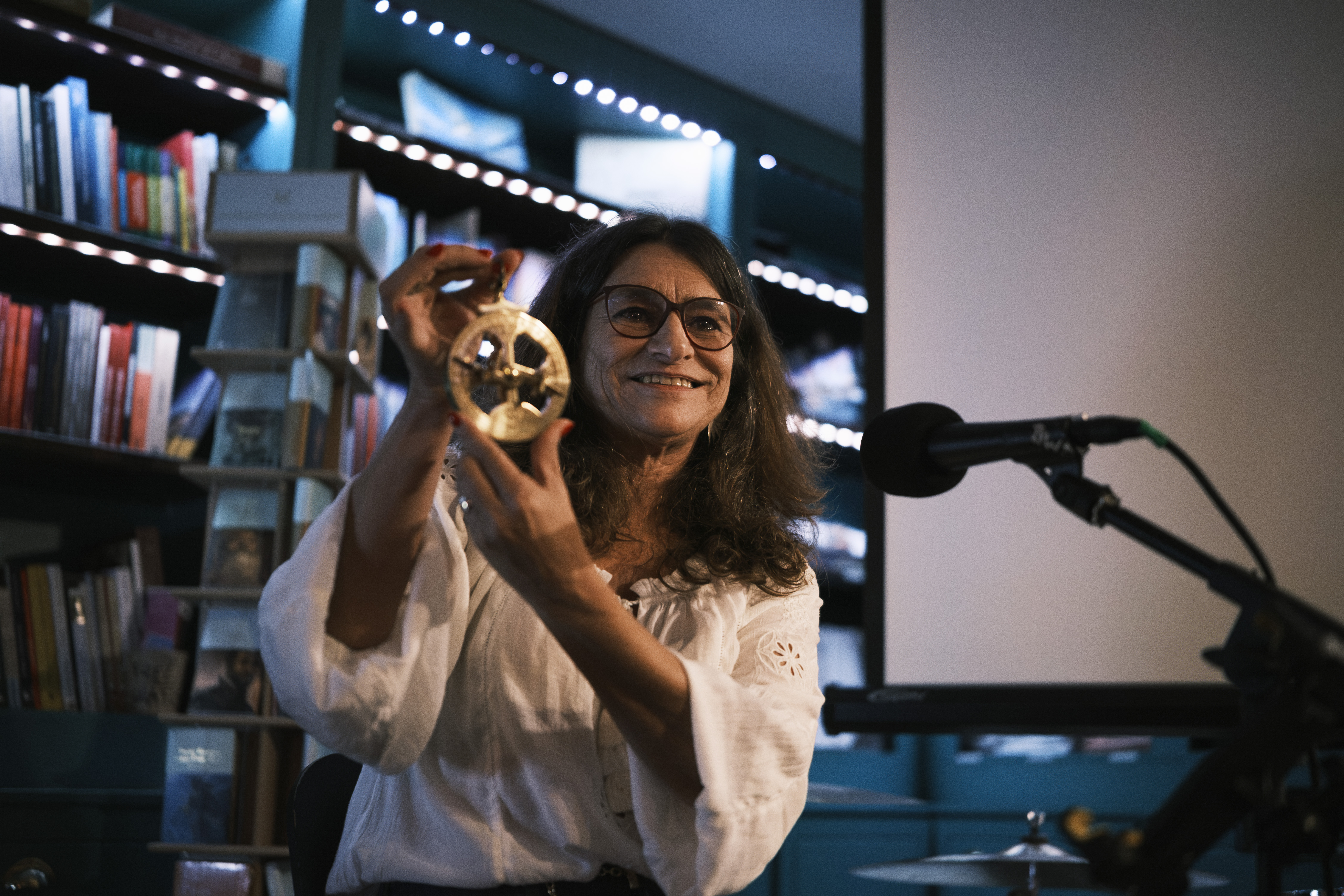
Manuela Juliano, an oceanographer at the University of the Azores on Terceira Island, spoke about her research, which identified the St. Helena Current - a “twin” of the Azores Current flowing much further south. She brought the golden astrolabe she received in 2004, when she was named one of Portugal’s “Heroes of the Sea” (Heróis do Mar).
Monika Szynaka, a researcher at the Centre of Marine Sciences (CCMAR) of the University of Algarve, showed a photograph of a coral and spoke about the relationship she has built with fishermen in the Algarve, in the south of Portugal, through her work on small-scale fisheries.
Filipe Tobana Nhanquê, a marine biologist from Guinea-Bissau, showed how the sea is woven into community life there: from fishing guided by the tides, to sea turtles offered to ancestors in requests for rain and good harvests, to mangrove wood used in funeral ceremonies and marine species that mark the passage to adulthood.
Gonzalo Bravo, a marine biologist and scientific diver from Puerto Madryn, in Argentine Patagonia, shared how years of studying southern right whales along the coast of Península Valdés turned an unlikely relationship into a close one.
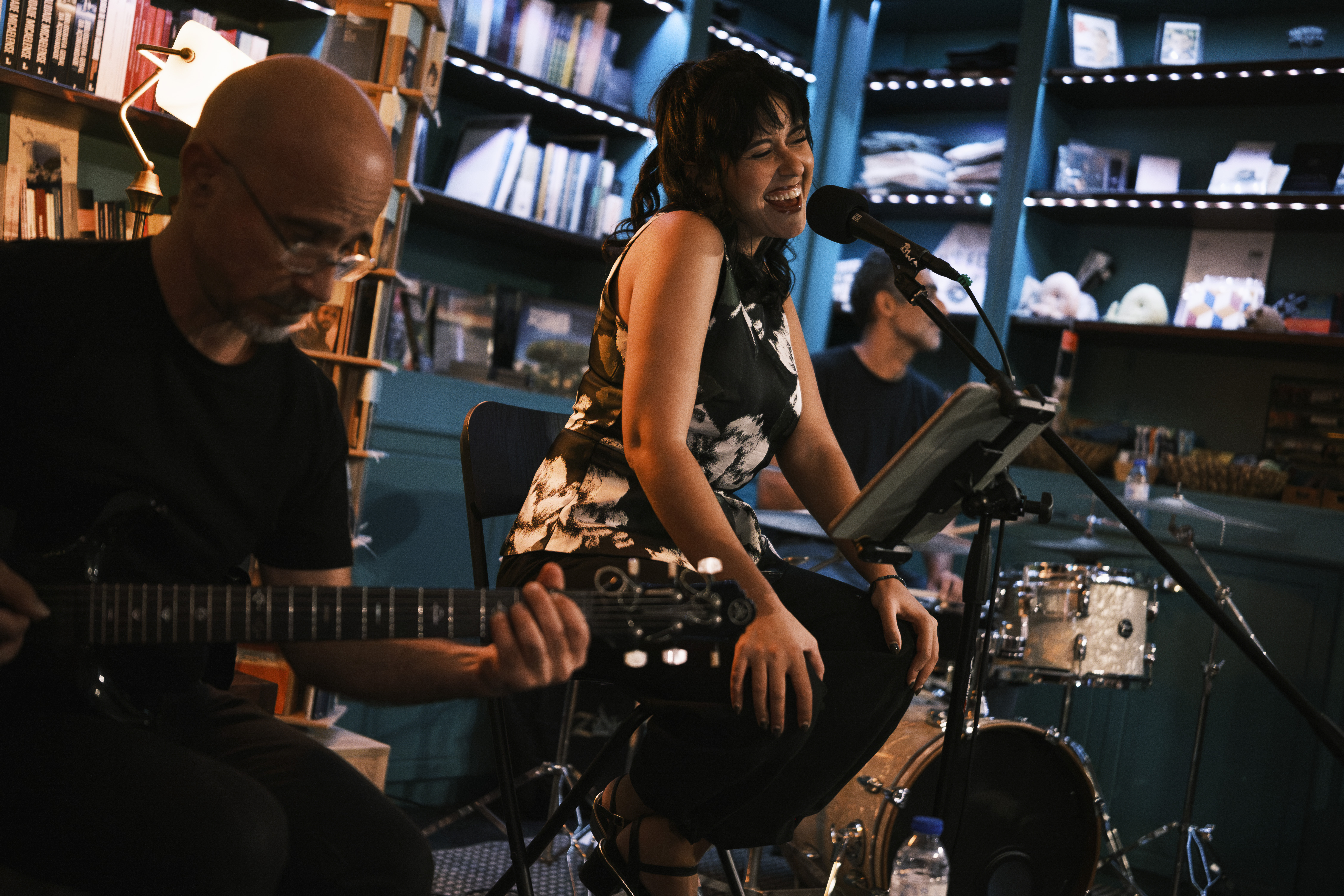
The ocean also connects cultures. Jazz has a long history on Terceira, partly thanks to the American community at Lajes Air Base, and the evening closed with a jazz concert by Lifetime.
The event was organised by the AIR Centre within the OKEANO project, in collaboration with MBON (Marine Biodiversity Observation Network). Special thanks to Joel Neto and the Lar Doce Livro team for hosting us.
[TC, 9 November 2026]

 Event