REPORT SUMMARY
- Water quality indicator TSM (Total Suspended Matter) for Portuguese Coastal waters shows an increase in water transparency since the COVID-19 confinement started.
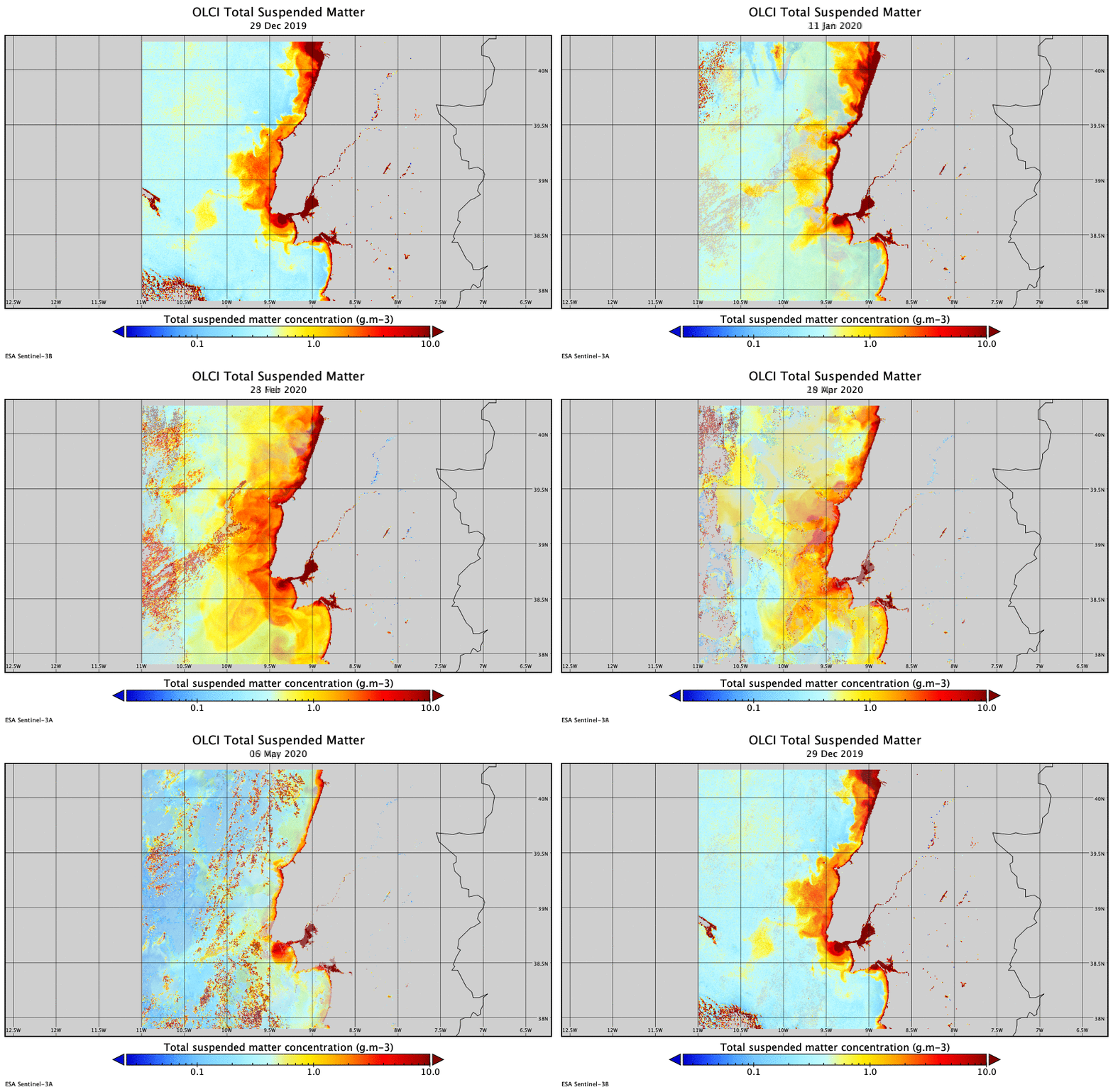
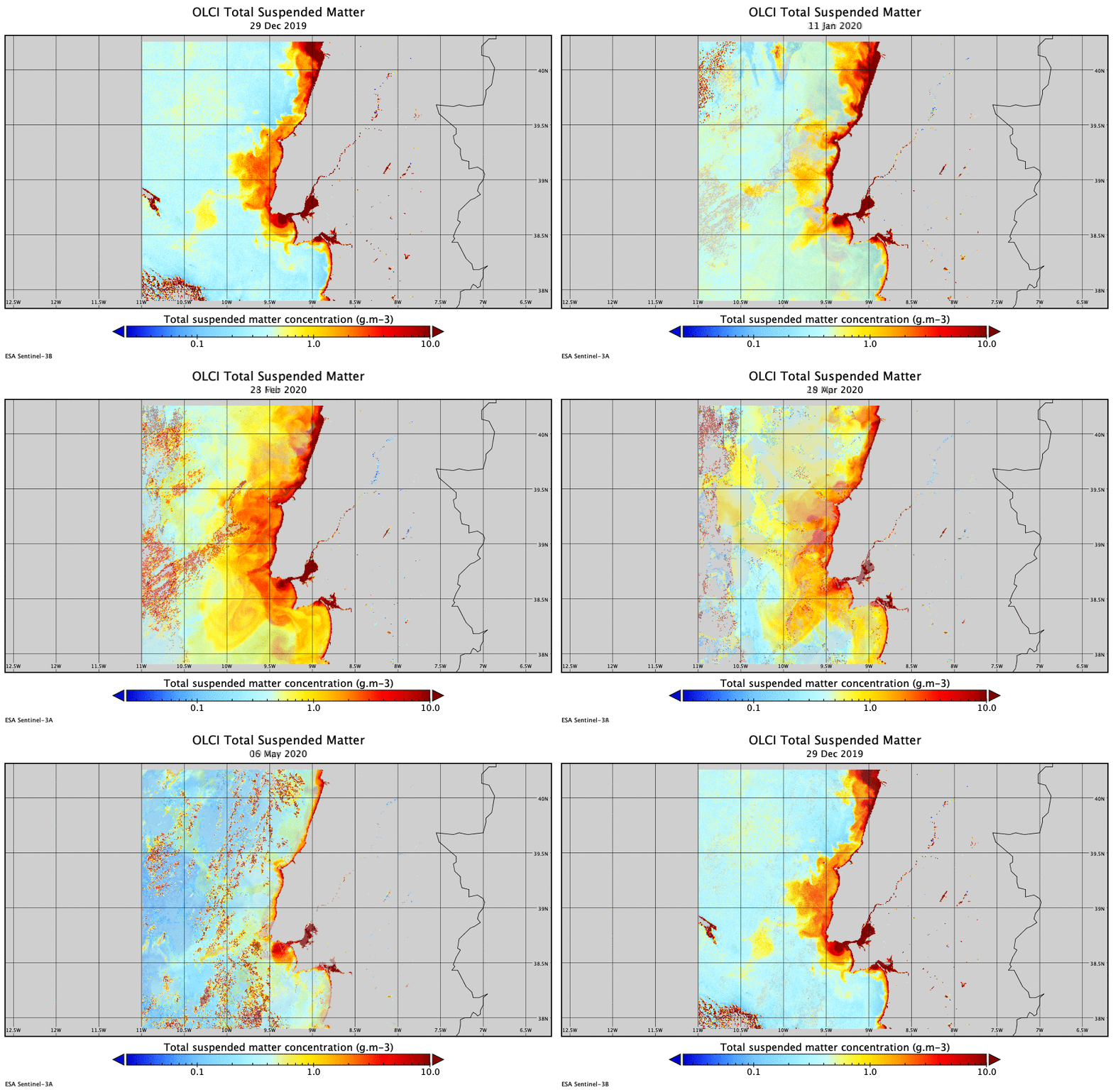
- TSM reduction from February to March, March to April and April to May was 17%, 37% and 53% respectively.
- As TSM levels decrease, the appearance of the water becomes clearer as light penetration increases.
TOTAL SUSPENDED MATTER (TSM)
TSM is typically measured in mg/L, and indicates the amount of suspended particles in water bodies, thus can be considered a parameter to evaluate the turbidity of water and its health. Some of these particles are present naturally in river and sea waters, such as plankton, fine plant debris and minerals, while others stem from human activity (organic and inorganic matter). As TSM levels increase, the appearance of the water becomes cloudier as light penetration decreases which has a negative impact on river and sea biology. A decrease in water clarity can affect photosynthesis which have important effects on biogeochemistry and aquatic life itself. High TSM levels can also clog fish gills, either killing them or reducing their growth rate.
The concentration of TSM has been analyzed before and after COVID-19 in the coast of Portugal to understand if any changes had occurred. The following pictures illustrate the differences of TSM between a given day before (February 2020) and after COVID-19 confinement. The results suggest that there was a decrease on the TSM concentration from February to March, March to April and April to May of 17%, 37% and 53% respectively. Although TSM is not only a consequence of human activities, these results may indicate a pattern as a result of COVID-19 restrictions.
Ocean and Land Colour Instrument (OLCI) on board Europe’s Sentinel-3A and 3B satellites with full resolution (up to 300m ground spatial resolution). With a total of 21 spectral bands, reflectance is measured in B8, B6 (wavelengths of 665 and 560) and B11 (wavelengths 709) bands are used for TSM for marine and inland water.
Figure 1: a) to c) - Total Suspended Matter for 23-02-2020, 28-03-2020 and the changes between these two dates, respectively
Figure 2: a) to c) - Total Suspended Matter for 28-03-2020, 19-04-2020 and the changes between these two dates, respectively
Figure 3: a) to c) - Total Suspended Matter for 19-04-2020, 06-05-2020 and the changes between these two dates, respectively
Disclaimer: neither AIR Centre nor the European Commission is responsible for any use that may be made of the information this report contains. Images generated with Sentinel-3 Level 2 OLCI Products from Copernicus Online Data Access (CODA) Service - EUMETSAT
Download report #5
here.
 Research