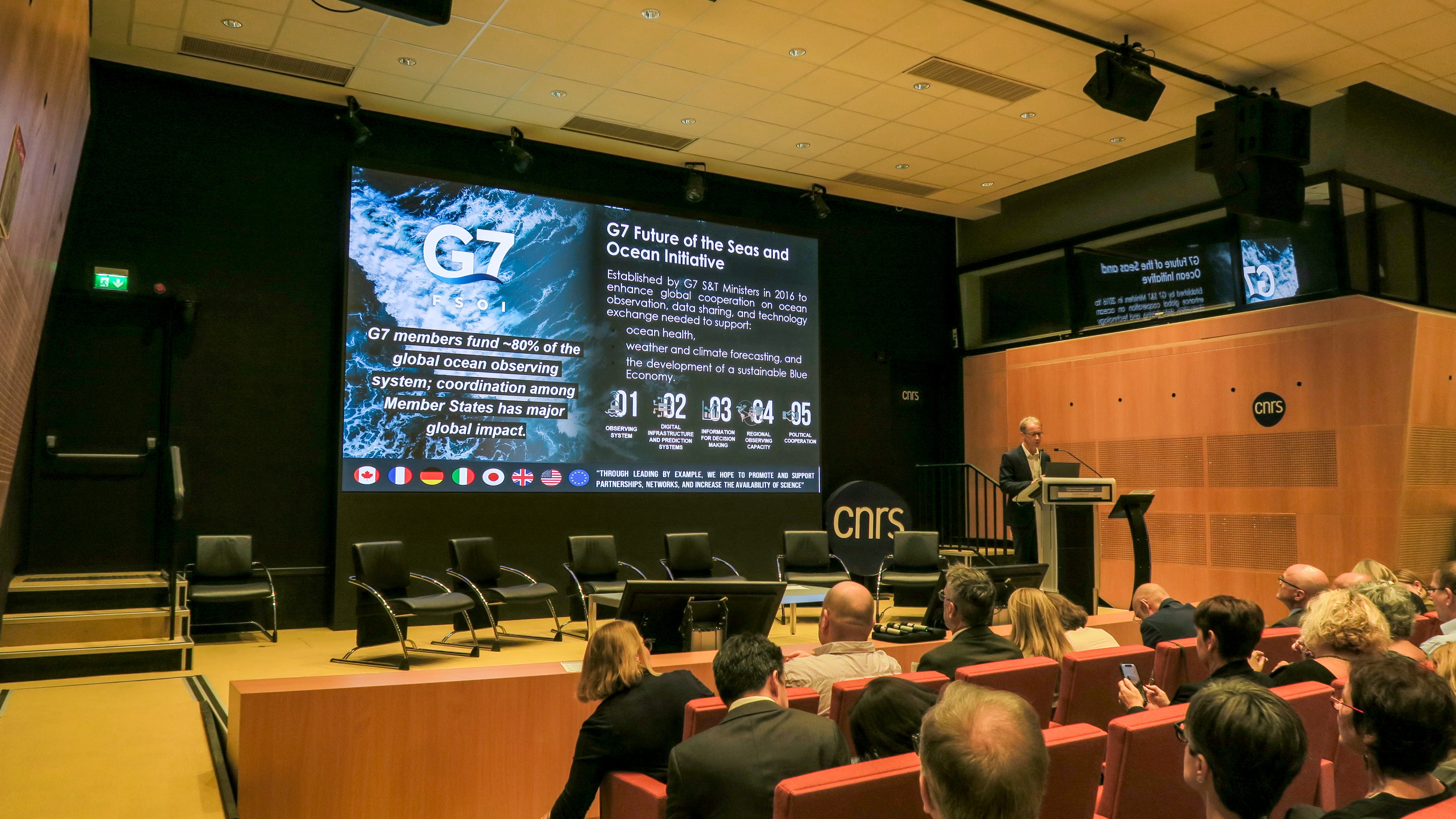
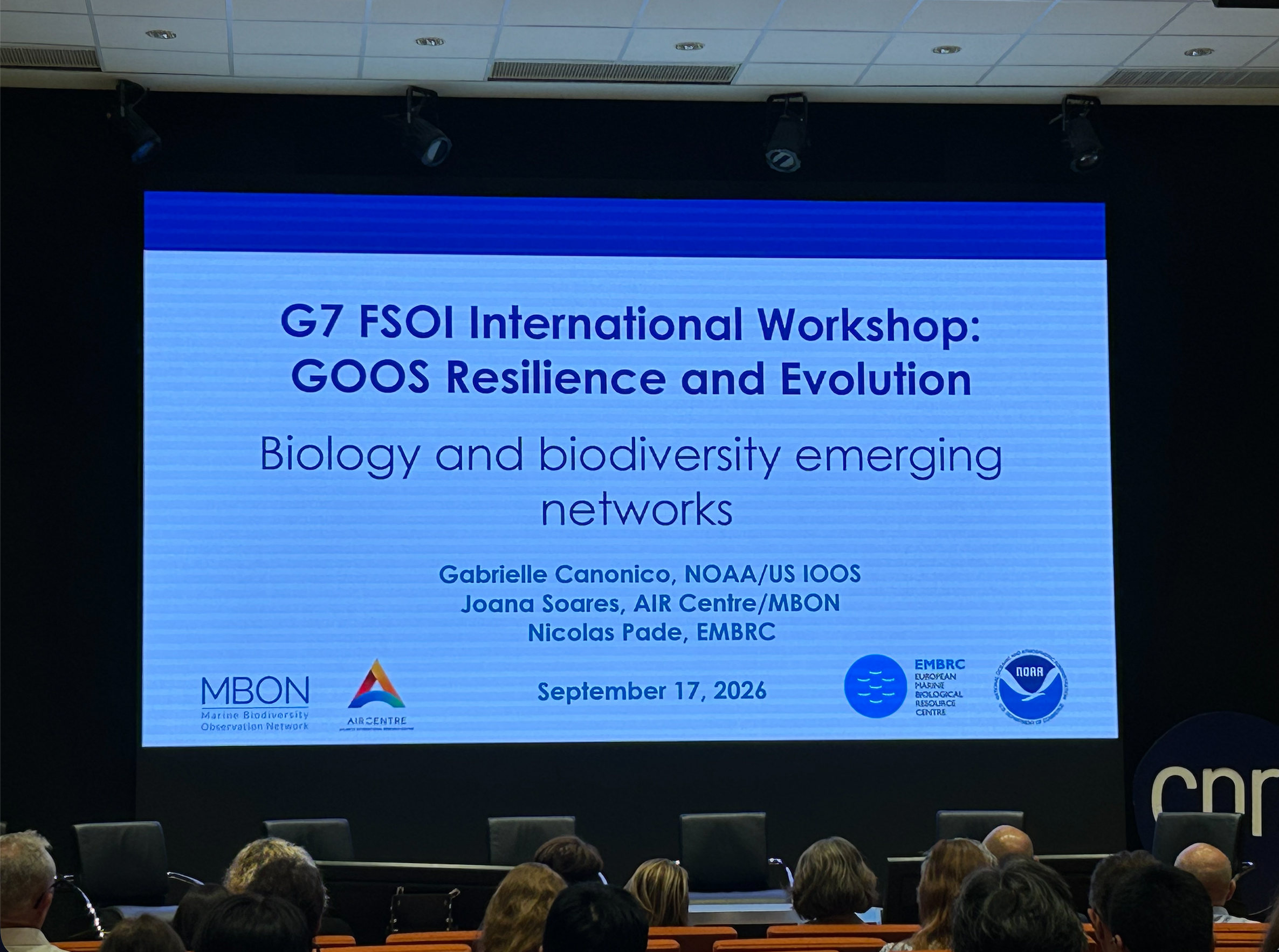
The G7 Future of Seas and Oceans Initiative (FSOI) International Workshop on GOOS Resilience and Evolution, held at CNRS in Paris on 17 and 18 September, brought together representatives working on the future of the Global Ocean Observing System (GOOS). During the event, AIR Centre's researcher Joana Soares joined representatives from EMBRC and NOAA/US IOOS, to present recommendations on strengthening marine biodiversity observations, highlighting the need to better integrate biological and biodiversity data into GOOS to improve understanding of climate impacts and support sustainable ocean use.
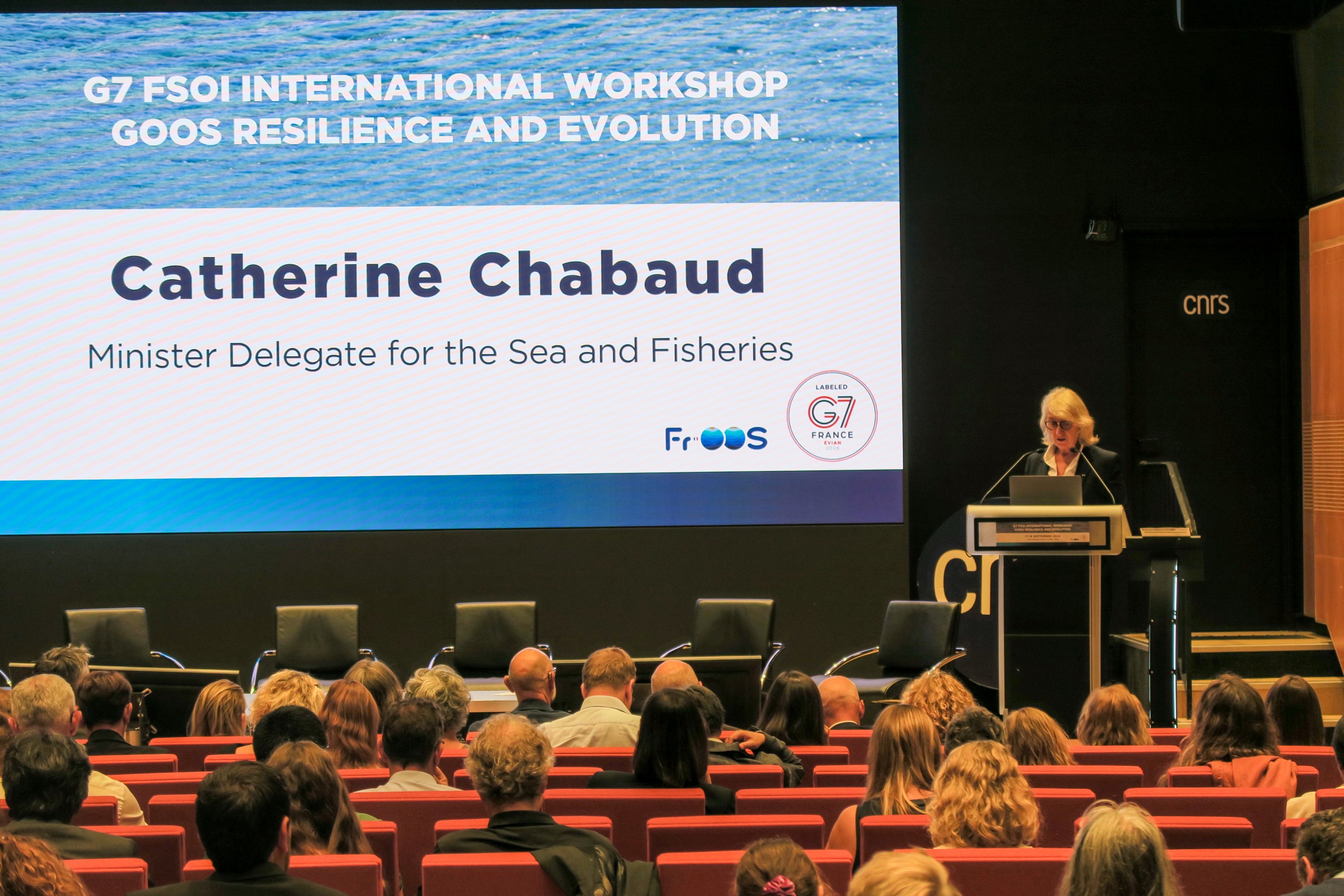
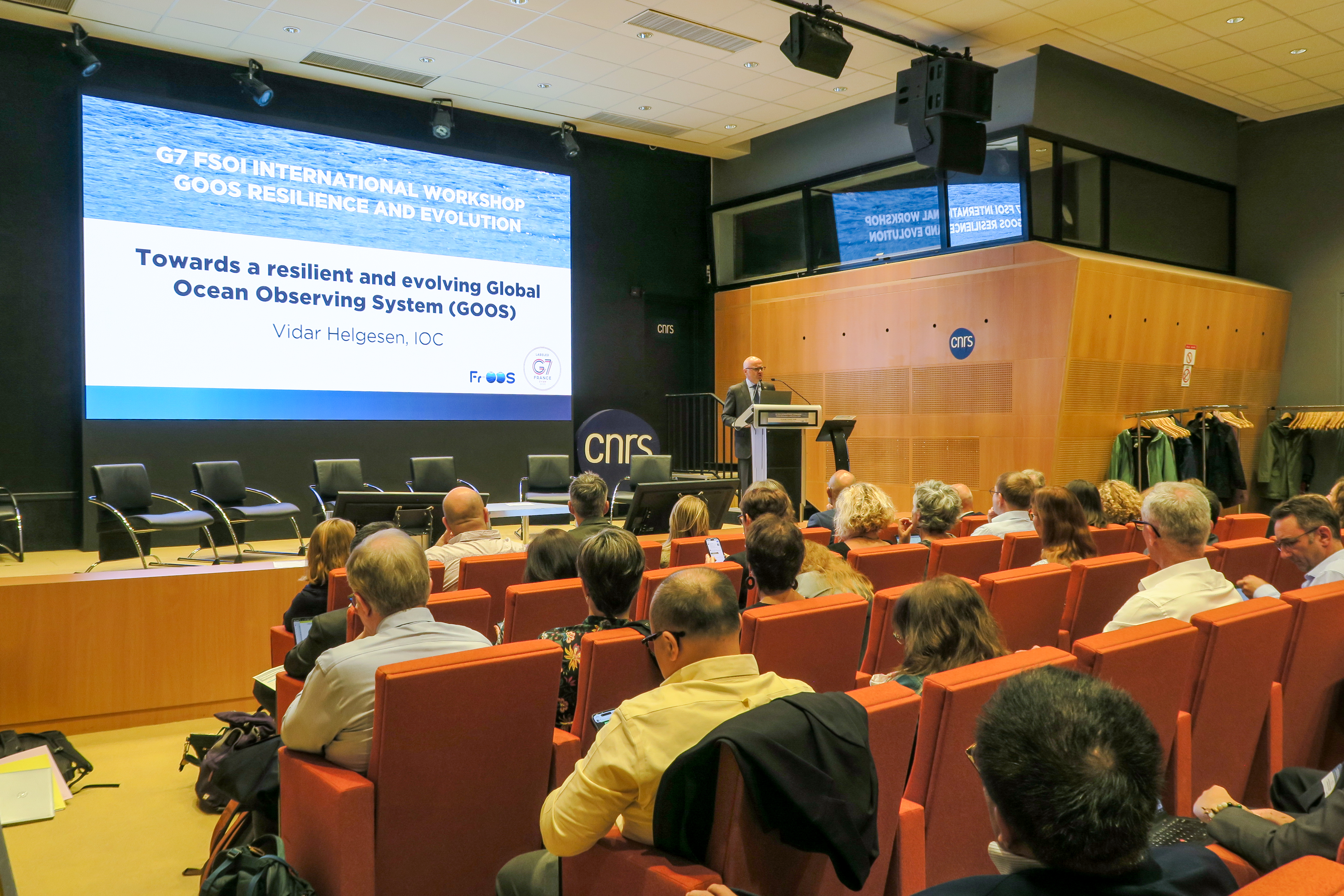
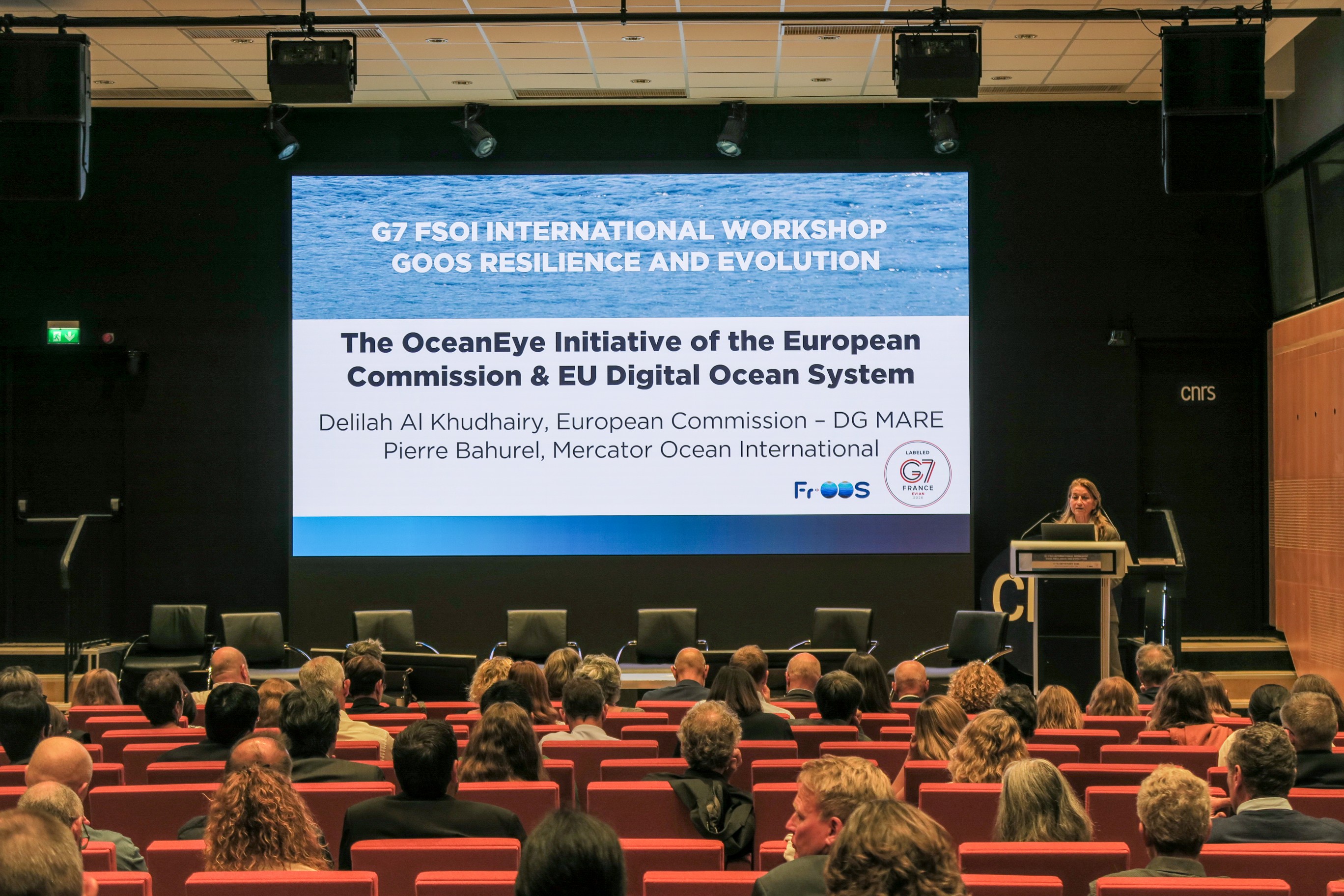
The workshop brought together representatives from G7 nations, the International Oceanographic Commission (IOC), the World Meteorological Organization (WMO), and international partners to assess the state of the Global Ocean Observing System and discuss its future development. The programme opened with welcome remarks from Minister Delegate for the Sea and Fisheries, Catherine Chabaud, followed by keynote presentations from Vidar Helgesen (IOC) on the future of a resilient and evolving Global Ocean Observing System (GOOS), and from Delilah Al Khudhairy (European Commission, DG MARE) and Pierre Bahurel (Mercator Ocean International) on the European Commission's OceanEye Initiative and the EU Digital Ocean System.
The AIR Centre contributed to discussions on how biological and biodiversity data, from species distributions to ecosystem health, remain under-integrated in global ocean observing efforts despite their central role in tracking climate impacts and supporting sustainable ocean use.
The presentation highlighted existing infrastructure, including OBIS, the world's largest open-access repository of standardised marine biodiversity data, and outlined recommendations for G7 members, including prioritising shared biological variables, integrating biology into established observing platforms, and moving towards long-term, sustained funding for biological time series.
The session formed part of a broader effort to position marine biodiversity observation as a core operational pillar of the global ocean observing system rather than a fragmented, project-dependent effort.

 Collaboration